Find real work
Recognize tests, builds, containers, batch jobs, and long-running scripts worth evaluating.
 AtomLane
AtomLane proves which commands can run together, then sizes concurrency for the machine actually doing the work. Long runs stay visible. Time savings stay measurable.
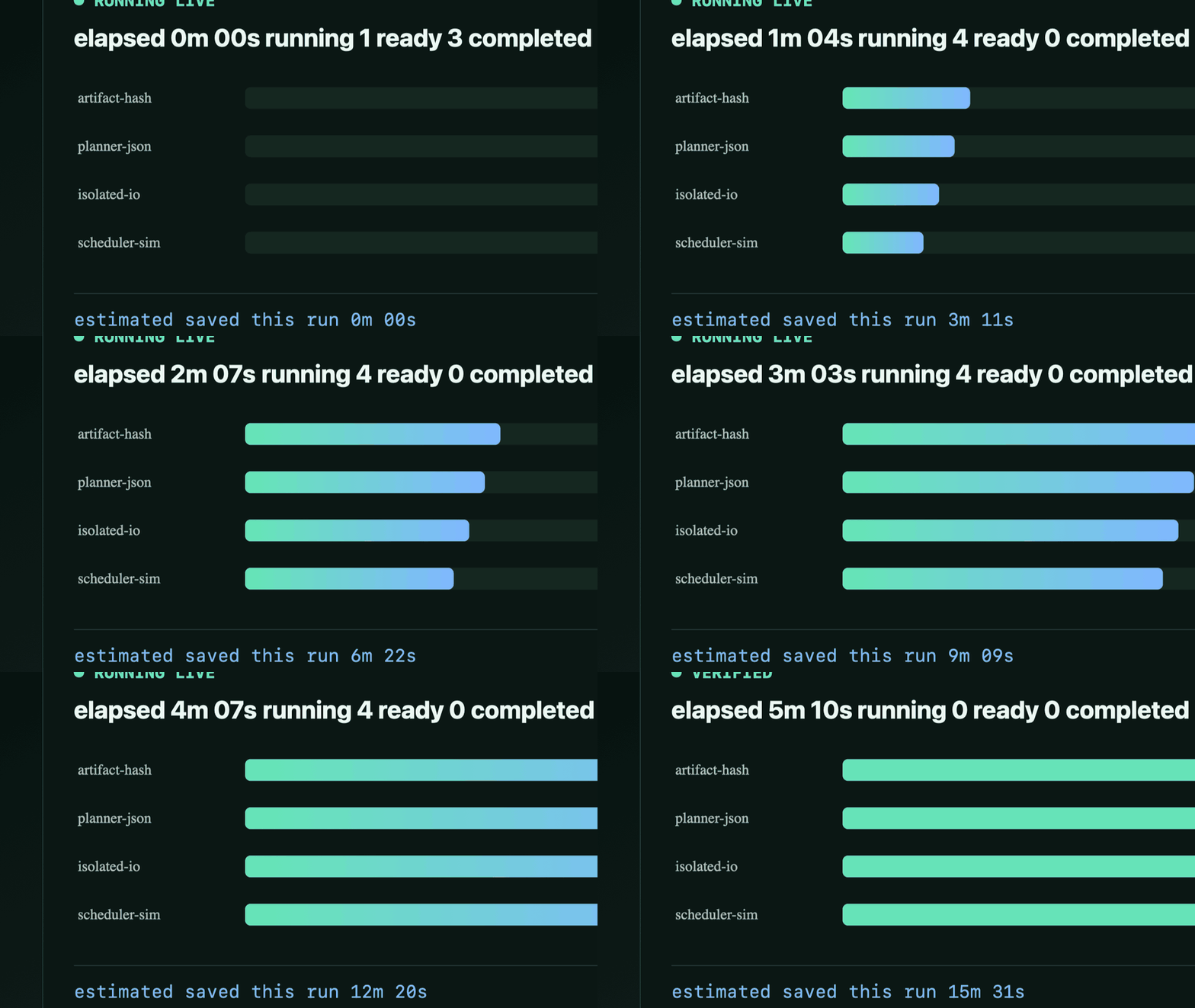
AtomLane sits between a coding agent’s plan and local execution. It accelerates only the work whose dependencies, effects, outputs, and resource needs can be bounded.
Recognize tests, builds, containers, batch jobs, and long-running scripts worth evaluating.
Model dependencies and reject overlapping writes, unsafe state, and unclear execution boundaries.
Allocate CPU, memory, workers, and accelerators across every active AtomLane session.
Stream live state, contain failures, and report measured per-run and cumulative savings.
The scheduler does not encode a fixed “4×” target. Four lanes belong only to the controlled public benchmark.
Actual concurrency is usually lower and is recalculated from current conditions.
One safety core, with workload-specific planning instead of a single generic “run in parallel” switch.
Use a bounded native worker pool when case independence, fixtures, ordering, and shared resources permit it.
Fan out independent packages or targets while preserving caches, artifacts, and success gates.
Plan multiple images and services inside the detected Docker Desktop CPU and memory envelope.
Separate preparation, validation, figures, and deterministic merges; advise on safe program-level refactors.
Release checks, platform evidence, and long-running benchmark artifacts are bound to the published source commit—not copied from a marketing spreadsheet.
Controlled four-lane overlap benchmark.
Controlled four-lane overlap benchmark.
Register the public marketplace, install AtomLane, then open a new Codex task so its Hook and tools load cleanly.
codex plugin marketplace add cloudguo123/atomlanecodex plugin add atomlane@atomlanemacOS is Stable. Native Windows remains a scoped Preview; review the Windows contract before production use.